
HOPE IN A BOX: COULD A SMALL SENSOR HELP DETECT ALZHEIMER’S EARLIER?
Alzheimer’s disease is often diagnosed after symptoms have already begun to affect memory, thinking, confidence and daily life. By that stage, families may already be under pressure — trying to understand changes, arrange appointments, adjust routines and make difficult decisions about care.
New Australian research is offering a hopeful possibility: what if signs of Alzheimer’s could be detected earlier, more simply, and closer to where people already receive care?
Monash University researchers have developed a small hand-held blood test concept that uses patented sensor technology to detect ultra-low concentrations of Alzheimer’s disease markers in blood within minutes. The device has been described as a finger-prick style test designed for future point-of-care use, with the potential to make early screening more accessible and less invasive than some traditional diagnostic pathways. Engineers Australia recently featured the research in its article, “Hope in a box: diagnosing Alzheimer’s early through technology.”
The technology is still in the research and validation stage, so it is not a replacement for medical diagnosis or specialist clinical assessment. Experts have also emphasised the importance of proper validation before any early screening tool becomes part of everyday healthcare. That caution is important — because early information must be accurate, carefully explained and supported by the right professional guidance.
But the direction of this research matters.
Earlier detection could give people and families more time: time to speak with doctors, understand options, plan supports, review the home environment, update routines, and make decisions while the person still has greater capacity to participate in those choices. For people living with dementia, and for those who love and support them, time can be one of the most valuable things technology can offer.
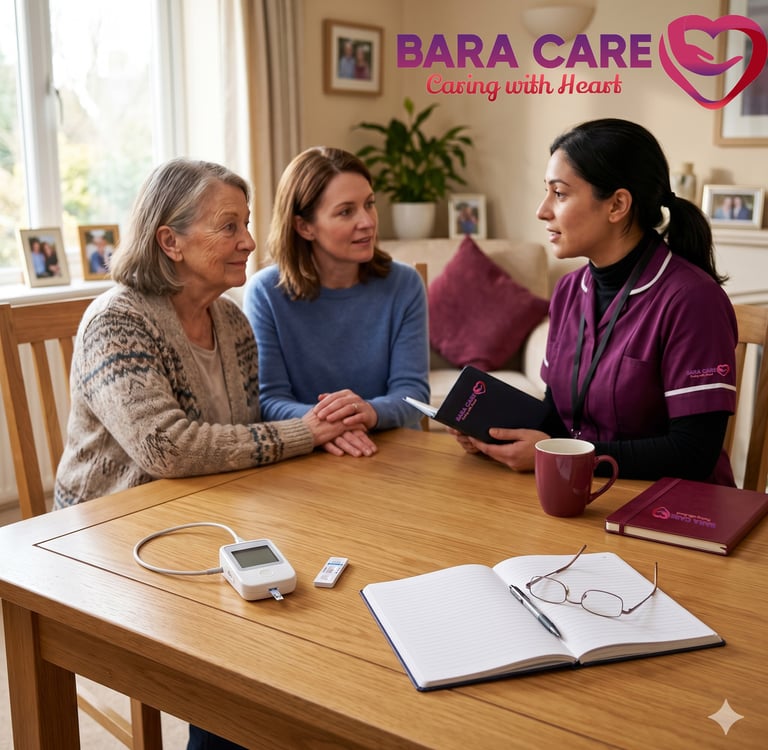
At BARA Care, this is where innovation connects with real-life support. A test or device may help identify risk earlier, but people still need compassionate, practical care after that moment. That may include dementia-friendly routines, occupational therapy strategies, home safety planning, community nursing, transport to appointments, domestic support, social connection, and aged care services that help people remain engaged and independent for as long as possible.
Technology can open the door to earlier answers.
Good care helps people live with those answers.
This research is not just about a small sensor. It is about a bigger shift toward earlier planning, safer homes, better conversations and dignity-centred support.
Progress often starts quietly. Sometimes, it starts with a small box — and a much bigger conversation about care.
Source: Engineers Australia, Hope in a box: diagnosing Alzheimer’s early through technology.
https://www.engineersaustralia.org.au/news-and-media/2026/04/hope-box-diagnosing-alzheimers-early-through-technology